.svg)


.png?width=1200&height=699&name=Meet%20the%20Board%20Candidates%202026%20(2).png)
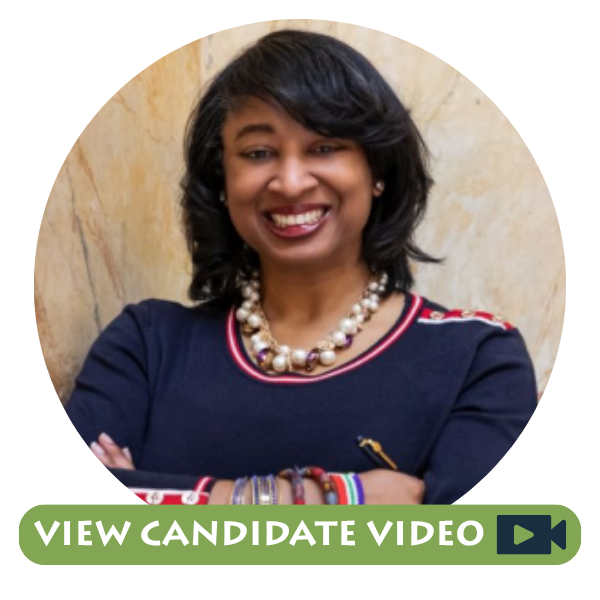

Bio
Renetta Garrison Tull, Ph.D., is the Vice Chancellor for Inclusive Excellence at the University of California Davis, and she is a past convenor for the University of California’s system-wide (10 campus) Council of Vice Chancellors for Equity and Inclusion. Tull’s undergraduate and doctoral degrees in electrical engineering and speech science are from Howard University and Northwestern University, respectively. She has had past faculty roles at UW-Madison, the University of Maryland College Park, and UMBC. At UC Davis, she is an Adjunct Professor in the Department of Electrical and Computer Engineering in the College of Engineering, and a faculty affiliate in the Interdepartmental Program on Human Rights Studies. As Vice Chancellor, her divisional portfolio includes the Davis-based Office of Campus Community Relations, and the Office for Advancing Mentoring and the Professoriate. The Sacramento headquarters houses the Office for Health Equity by Design for Inclusive Excellence (HEDI), serving the medical school, nursing school, and medical center. Inclusive Excellence also covers medical clinics around California, and UC Davis’ locations in the Bay Area and other parts of the state. Her portfolio also includes the Avanza initiative; the Police Accountability Board; the Center for Reducing Health Disparities; the Center for the Advancement of Multicultural Perspectives on Science; the Center for the Advancement of Multicultural Perspectives on Social Sciences, Arts, and the Humanities; and the Truth, Community Healing, and Transformation Center. She credits the success of Inclusive Excellence to talented teams and a supportive university environment. She is proud to be the Executive Sponsor for the UC Davis Principles of Community university-wide campus climate campaign, which highlights the key phrase, We affirm the dignity inherent in all of us.
Before joining UC Davis in California, Tull was in Maryland at the University of Maryland Baltimore County (UMBC) and served as Assistant Dean for Graduate Student Development (GSD), Associate Vice Provost for GSD and Postdoctoral Affairs, and Associate Vice Provost for Strategic Initiatives. She later had a detail with the University System of Maryland (USM, 12 institutions), serving as the Director for USM Pipeline Professional Development Programs, and she had Co-PI and PI roles on National Science Foundation (NSF) grants within the LSAMP, Alliances for Graduate Education and the Professoriate, and ADVANCE programs. At Davis, she is PI for the NSF-funded PROMISE Engineering Institute (PEI - UC Davis and UMBC). PEI has developed an intergenerational mentoring engineering leadership network which has engaged engineering graduate students and senior leaders from UC Davis, UMBC, UC Irvine, UC Berkeley, UCLA, Stanford, University of Maryland College Park, Virginia State University, Rice University, George Mason University, and North Carolina A&T.
An international speaker on global inclusion in STEM, Dr. Tull, a member of Tau Beta Pi, has shared Humanitarian Engineering principles and work connected to the United Nations' Sustainable Development Goals at the United Nations Headquarters, and on every continent (except Antarctica). Through the Latin and Caribbean Consortium for Engineering Institutions (LACCEI), she has given bilingual talks across Latin America on topics related to engineering for all.
Tull was a finalist for the Global Engineering Deans Council/Airbus Diversity Award (announced in Italy and acknowledged in Dubai). In addition, she has received the ABET Claire L. Felbinger Award for Diversity, the Student Platform for Engineering Education Development Global Mentoring Award, and the Electrical and Computer Engineering Department Head Association’s (ECEDHA) Diversity Award. She is a mentor for SACNAS and a campus liaison for the HispanicServing Research Universities (HSRU). She was a PI for Puerto Rico’s ADVANCE Hispanic Women in STEM, she is the past President for LACCEI, and the current Vice President of Transformative Initiatives for the International Federation of Engineering Education Societies (IFEES). Tull is currently leading the “Alianza” project for LACCEI in partnership with the Organization of American States; she sits on the Board of Directors of the American Geophysical Union (AGU), one of the world's largest Earth and space science organizations; and recently, she has been invited to serve on engineering expert teams in Chile and China.
Tull was a co-author for UNESCO Engineering Report II, and she participated in the UN Women CSW66 side event on “Role of Women in STEM in Addressing Climate Change” where she joined global leaders on the importance of women in engineering for climate action, disaster risk reduction, and sustainable development. She is an author of a chapter of Rising to the Top, an IFEES book on global women in engineering, and was a co-author for the National Academies’ “Impact of COVID-19 on the Careers of Women in Academic STEMM,” and “The Science of Effective Mentoring in STEMM. She is also co-author for the Matilda y las Mujeres en Ingeniería series, and her book chapter with a collaborative team of authors from several continents, Models for International Collaborations to Nurture Students into Global Engineers, in “Academic Leadership in Engineering Education: Learnings and Case Studies from Educational Leaders Around the Globe,” was launched in Australia. Tull enjoys her work as a global education policy strategist and champion for equity. She often travels with her husband of more than 30 years, Dr. Damon Tull, with whom she collaborates on work such as “The Success Equation,” and “Dark Matters: Metaphorical Black Holes…”, which creatively couples math, physics, and social science.
Personal Statement
My work has always focused on facilitating inclusion and excellence in STEM. After graduating from Howard University, and Northwestern University, I started a vocal pathology and accessible technology lab as a new professor at the University of Wisconsin-Madison. After leaving Wisconsin, and working to with start-ups and councils to expand entrepreneurship opportunities for students, I shifted to academic administration and found that I could use my personalized approach to professional development programs to advance future STEM leaders. As my career progressed, I contributed to more national policies, and influenced structures that contribute to the success of students and professionals, in ways that provided economic advancements for families and communities as well as advancements in science. I want to join the SACNAS board to link with others as I offer my network, creative solution-finding, collaboration, strategic planning, and forecasting, to leverage the collective to meet the SACNAS mission.
On a more personal note, I am keeping a promise to the mother of one of my mentees who grew up in Puerto Rico. When Jessica Soto Perez, a chemical engineering graduate student, was killed by her husband on UMBC's campus, I vowed to do something to honor her memory. I created the "Jessica Effect" that built family and community involvement into subsequent programs, and I want to continue to channel Jessica’s loss, the loss of other students, and the loss of our children who could have been scientists, into positive energy to build successful pathways for our SACNISTAs.
Mission Commitment
I've mentored SACNISTAs for years! I'm a lifetime member of NSBE, and I've been a speaker for SHPE, AISES, MAES, and ABRCMS, providing STEM professional development to future leaders. As a lead for grants that broaden STEM participation (e.g., LSAMP, AGEP, ADVANCE: 2003-2019), I noted that my mentees in Maryland had very few Latino/a/x and Native mentors. I’d heard about SACNAS Math Institutes and began attending SACNAS around 2009. As I made new friends and found mentors for my students, I became a judge for SACNAS poster sessions, recruited students for LSAMP Bridge to the Doctorate fellowships, and gave talks through GEM, the National Academies, and the Sloan Foundation. In 2019, as Vice Chancellor at UC Davis, I began funding delegations to attend SACNAS. In addition, I funded the screening of Physicist Dr Manuel Calderon de la Barca Sanchez’ film “Secrets of the Universe” at SACNAS Hawai’i, and I've mentored SACNAS advisors. I was given words of wisdom from Dr. Marigold Linton and Dr. Richard Tapia to continue my work, and I was mentored to be a VP by Dr. Lydia Villa-Komaroff. I am thrilled to serve our communities' future scientists, and develop intergenerational mentoring structures that facilitate their success.
Leadership Style
My leadership blends vulnerable and crisis styles, filtered through an equity lens. I ask: Who is being served, who is missing from the table, and whether a given solution is truly working for everyone. Equity has not resonated with all citizens. To dispel misunderstandings, I've held numerous meetings, explaining the legality of our work, adherence to Civil Rights law and the Constitution. Throughout these changes, I developed a sustainable path for impact: the Inclusive Excellence Framework: Engage, Equip, Empower, and Elevate.
I believe in moving practice to policy, and adhering to bylaws to avoid informalities that can lead to a lack of transparency. When my colleagues and I don't agree, we work to find consensus. My vulnerable leadership style reduces hierarchies by offering voice and agency across ranks, utilizing appreciative inquiry, and collective impact. My crisis leadership style requires visibility, stress-testing solutions from multiple angles, and keeping contingency plans at-the-ready. I employ John Maxwell's 360-Degree Leader principles, i.e., developing people, modeling behavior, transferring my vision, and rewarding results. I connect this to Yosso's Community Cultural Wealth model and McMillan/Chavis Psychological Sense of Community, so that my Inclusive Excellence framework can connect to my Community Equation to serve the big "C."
Fundraising Experience
My grant-funding record spans roughly two decades, primarily through NSF, exceeding $20 million. My key award was as Co-PI, NSF PROMISE: Maryland's Alliance for Graduate Education and the Professoriate (AGEP) $1.5MM (2008 - 2010), which I led as Founding Director across a 12-institution University System of Maryland alliance from 2003-2019. I was also Co-PI on three LSAMP Bridge to the Doctorate, $987K each, PI on an ADVANCE award run jointly with Universidad Metropolitana in San Juan, Puerto Rico, and Co-PI on other grants for workforce development and students with disabilities. I've also been either a lead or partner on grants with the U.S. Department of Education, Council of Graduate Schools, NIH, Montgomery County, Maryland Technology Growth Fund and the Maryland Department of Business; Economic Development.
In California, I am the "UC" partner PI on 3 regional grants ($54M total), and I have direct fundraising responsibility for my division's budget and philanthropic support. My division runs donor and crowdfunding campaigns for units and groups, and I use my social media presence to promote giving, sponsorships, and donor engagement. I have developed fee-based external consultations and workshops, and educational products for retail. I believe that these streams can be further developed for SACNAS.
Board Leadership
My board training reminds me that I have the “duty of care” and that a board member has fiduciary responsibility. As a volunteer board member, it is important to always act in the best interest of SACNAS, and recognize that the board position is not to be used in any way that would compromise the organization or its members. The position is not for individual gain. Ethics are key and respect for other board members is imperative. Within the campus-wide UC Davis Principles of Community, which is part of my portfolio, there is a line that says, “We affirm the dignity inherent in all of us.” Such dignity is not just for the members, but it must be exhibited within the board’s membership as well.
Active participation, resource development, and fundraising are expected. Confidentiality, collective leadership, and support for decisions must be honored. A board member should steward the strategic plan, and have agility to adapt to the dynamics of change. When I’ve written about board work, I’ve described navigating turbulence, confronting declining public trust in science, committing to data and transparency, respecting governance, and collaborating. A board member considers the position to be one of honor and service.
Organizational Governance
I have been on the board of the Latin and Caribbean Consortium of Engineering Education Institutions (LACCEI) - 2024-2026. As President, I worked with fellow board members, the executive director and staff to provide engineering leadership, accreditation training, professional development, and high authorities' collaborations in Mexico, Cartagena, and Chile. Our organization is in good standing, having revenue through memberships/services/hybrids. I became founding director of Alianza, the alliances initiative in partnership with the Organization of American States. Organizations participating in initial alliance roundtables and features include HACU, NAMEPA, AMIE, and ECEDHA, with new participation from universities in Texas and Florida. Further, I suggested diversifying operation locations to manage political risk, resulting in LACCEI's operation in Europe.
Board of Directors – American Geophysical Union (2023-2026). I’m part of the board that hired the current permanent executive director. I have been part of the future-casting and strategic planning. Some of that work is captured in my article for AGU’s “From the Prow."
I’m a Vice Chancellor and member of the Chancellor’s cabinet. I have brought forward advances in campus culture, $58M to the region, employee satisfaction, reduced regional employment, and increased student belonging.
National Engagement
National recognition of my work is due to being a lead, advisor, or speaker for hundreds of programs from Alaska to Puerto Rico. The PROMISE program that I developed with colleagues in Maryland has had segments replicated and adapted at other universities. The PROMISE Engineering Institute is bi-coastal, and the intergenerational mentoring frameworks for legacy-building are being discussed for adaptation in the US and in South America. My work with the Latin and Caribbean Consortium of Engineering Institutions and the World Engineering Education Forum has provided opportunities to fund and mentor students and faculty from US-based MSIs by taking them to countries around the world in Africa, the Americas, Asia, and Australia. In past and present roles, I’ve worked with several companies through university corporate boards, the National GEM Consortium, and other boards where there is engagement with corporate sponsors. Work on innovation and entrepreneurship councils and science-based non-profits has been in California, DC/MD/VA, Illinois, North Carolina, NY, and Puerto Rico. I have contributed to reports for the National Academies and written sections in those national reports about SACNAS. Relationships that I've built across all sectors can be leveraged to engage participation and advocacy for SACNAS.




.svg)
.svg)